
Interview with Carlos Fernández-Rubíes, CEO of Creand Wealth & Securities S.A., and Sébastien Leleu, Chief Strategy Officer of Creand Wealth & Securities S.A., published in Paperjam.
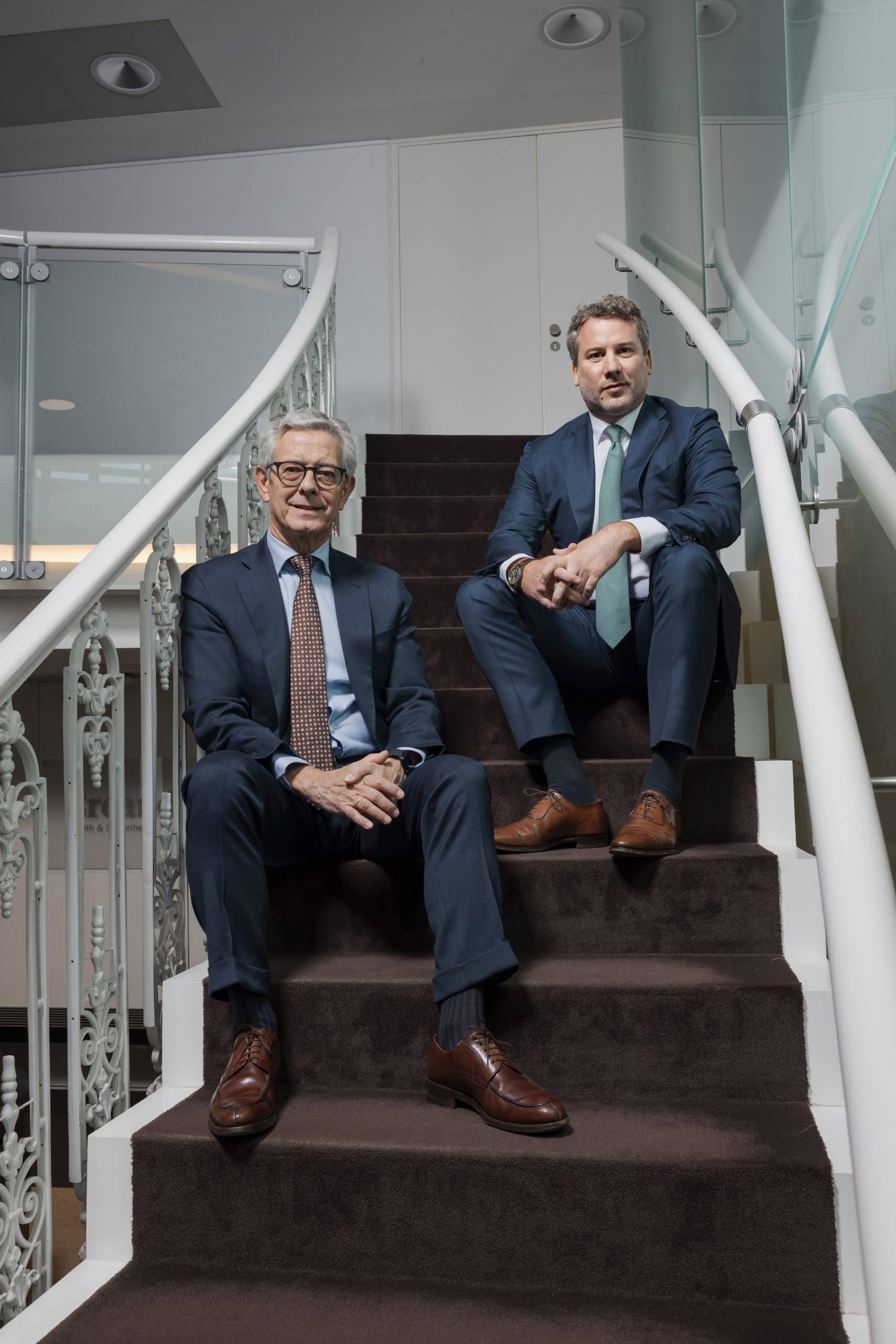
On 1 November, Banque de Patrimoines Privés S.A. will change its corporate name to Creand Wealth & Securities S.A., in line with its commercial brand. Two top figures explain how the entity will remain unchanged, delivering the same complete asset Servicing value chain and customer-centric approach.
Banque de Patrimoines Privés is widely known and appreciated in the market. Why did you decidí to change your name?
Carlos Fernández-Rubíes, CEO, Creand Wealth & Securities S.A.: As our old name suggests, we started as a private bank, but for years we’ve offered a full range of asset servicing services. The name change simply formalises what already happened commercially in 2021, when we first started operating publicly as Creand Wealth & Securities.
Will anything change in terms of service, contracts, or your team?
Sébastien Leleu, Chief Strategy Officer, Creand Wealth & Securities S.A.: Not at all. Our banking licence, the legal entity itself, our shareholders, our offerings, our people, and every commitment we hold with clients and partners remain untouched.
How do you see your evolution from a private bank into what you are today?
CFR: We were founded in our corrent form in 2011, when Crèdit Andorrà acquired Banque BPP and renamed it Banque de Patrimoines Privés S.A. For years, wealth management was the most visible, client-facing part of what we did, so that’s the identity that stuck, even as the reality shifted. We built up our depositary capabilities in 2015, expanded central administration in 2017, and broadened the platform with corporate services, cash management, and brokerage. From then on, we focused on private assets, where our integrated, relationship- driven model is particularly relevant. Today, asset servicing makes up the largest part of our business, with €20 billion in combined assets under depositary and administration.
Is private banking still one of your core services?
CFR: Wealth management remains a genuine strength and a real differentiator, but it’s now one of six integrated services, not our whole identity. That said, our approach to clients, including the level of individual attention, flexibility, and tailor-made solutions, is still very much inspired by our private banking background. Client centricity is one of the four values guiding our strategy, alongside bespoke banking, being technology- driven, and acting as a one-stop shop. As we’ve scaled into asset servicing, we’ve set up a governance model that preserves proximity rather than falling into the one-size-fits-all approach that usually comes with growing. The same senior relationship teams work across services for a given client, and solutions are built around what that client actually needs. In short, we’ve kept the private banking instinct and applied it to a much broader platform.
How has technology helped you to evolve from a traditional banking foundation into an integrated platform serving both private and institutional clients?
SL: We’ve always approached our services with a technology-first mindset. Back in 2014, we selected Avaloq as our core banking system, and we were the first user of Depowise, which gave us cutting-edge support for our depositary duties. More recently, we’ve extended our NeoXam GP4 platform to serve private assets alongside traditional structures.
The Luxembourg market can seem crowded, especially with big players. What makes you stand out?
CFR: When we entered this activity it was mainly covered by major Banks devoted to UCITS and operating on a highly standardised, volume-driven model. We chose a different decided to be selective and focus on clients and structures where our flexibility, proximity and integrated approach can genuinely make a difference. This is particularly relevant in private assets, where structures tend to be more complex and clients value a more tailored approach. We compete by applying the lessons we learned in private banking: being client-centric, flexible, and giving clients what they need rather than trying to sell them something else.
Describe the full asset-servicing value chain you offer. Why does having it all in a single entity matter to clients?
SL: Our value chain spans six integrated business lines: depositary and custody, central administration, corporate services, cash management and brokerage, financing, and wealth management, all supported by a digital platform. Having this inside a single licensed banking entity, rather than spread across several providers, gets rid of the operational complexity and governance friction that a multi-provider setup creates. One regulated entity means one relationship, one point of accountability, and faster decision- making. Our broad view of each client lets us adapt quickly, whether that’s opening an account for a new fund vehicle or meeting a short-term financing need.
For a fund manager or institutional investor, what’s the benefit of working with you rather than several providers?
SL: The number of services we offer is significant, but what’s more important is how they operate within a single integrated environment. That’s particularly valuable in private assets, which involve more complex structures, cash flows, governance arrangements, and operational requirements. Using several providers inevitably creates extra points of contact for the client to deal with. Our model lets a manager bring everything together
under one institution, cutting out a big chunk of that complexity, with full alignment of interests, since one entity is accountable end-to-end rather than several providers, each focused on their own slice of the work. Offering many services under one roof isn’t the hard part; making sure they actually work together around the client is.
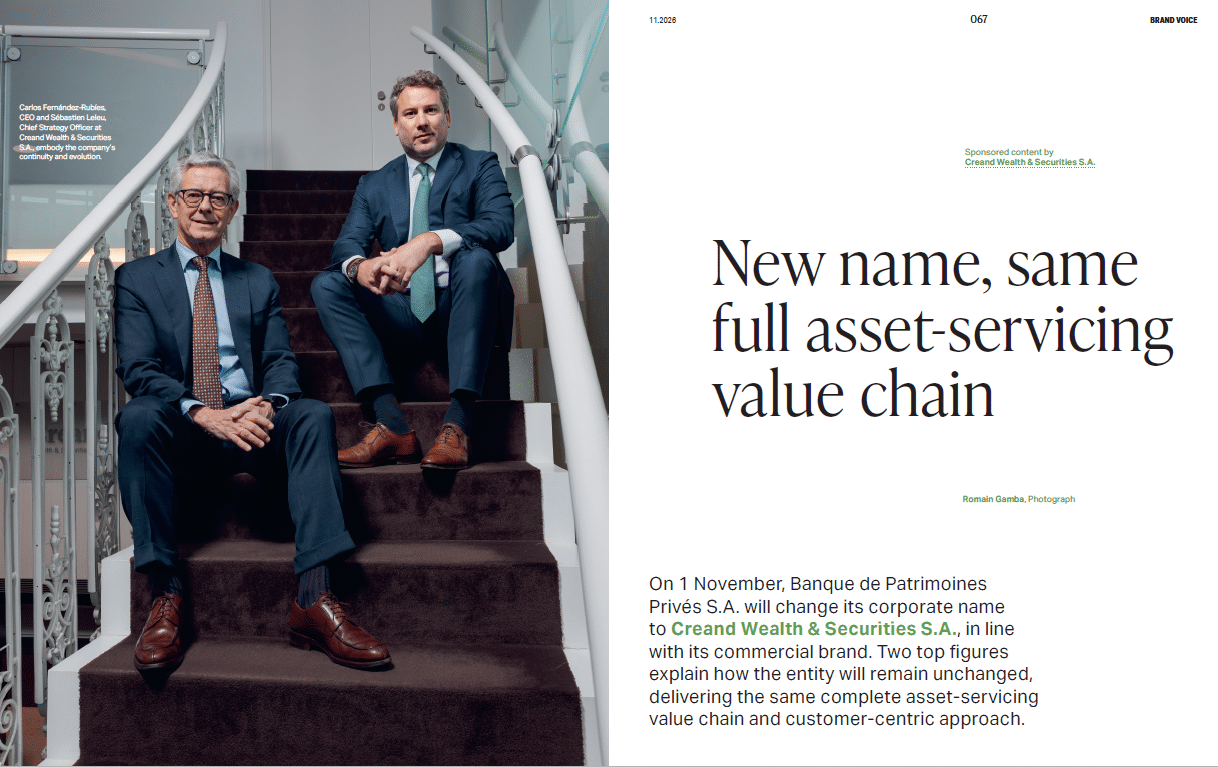
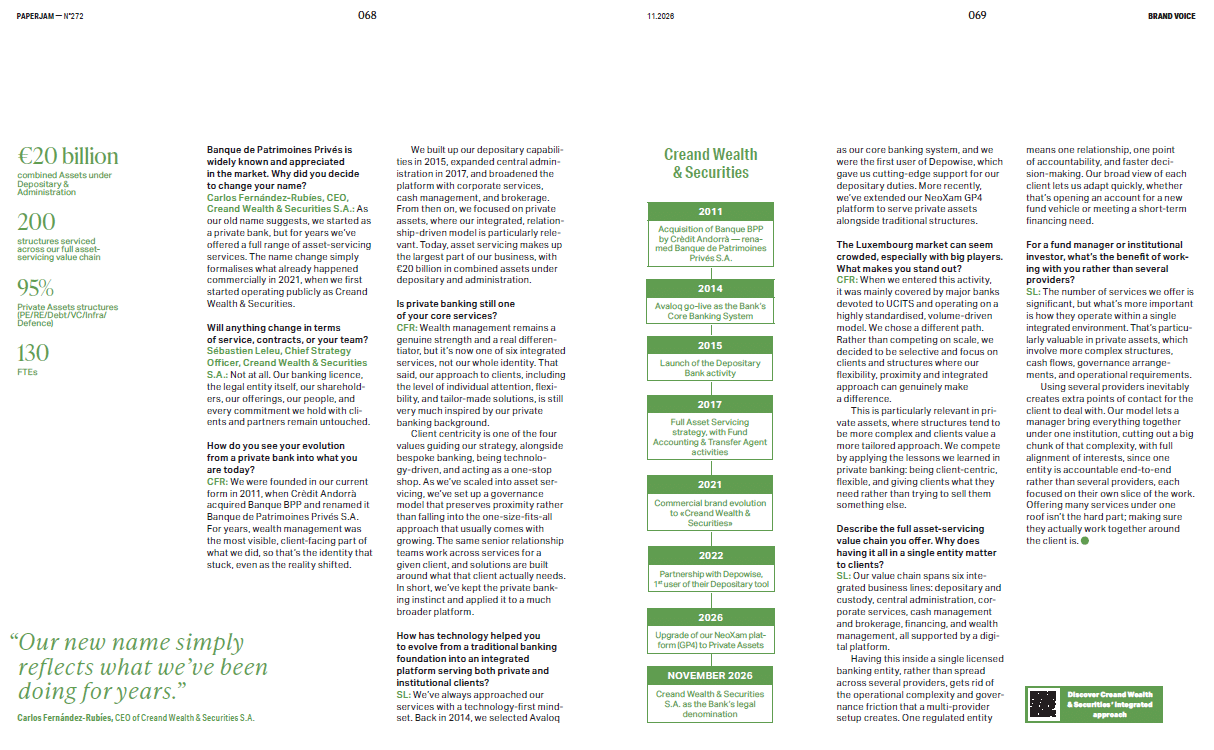
Photo: @Romain Gamba, Paperjam
Article published in Paperjam on 14/10/26