
As we head into the second half of the year, oil prices are plummeting, S&P 500 earnings estimates are increasing, and Wall Street firms are raising their year-end price targets with some exceeding 8,000.
Since the end of March, it has been full steam ahead for US equities. More recently, however, the S&P 500 has entered a period of consolidation, moving sideways while remaining close to its all-time highs.
The mega-cap stocks have struggled over the last month, illustrated by a 5.4% decline in the Vanguard Mega-Cap Growth ETF (MGK). At the same time, however, a rotation has helped keep the market from declining. Over the same period, the Russell 2000 is up 1.7%, while the equal-weighted S&P 500 is up 2.3%. In fact, 65% of stocks in the S&P 500 are above their 200-day moving average. Both cyclicals and many defensive stocks have been on the rise. The reasons behind this rotation, and how long it will persist, remain open to debate, but healthy bull markets are typically characterised by money rotating within the market rather than flowing out of it altogether.
This rotation is particularly evident in sector performance. The Philadelphia Semiconductor Index (SOX) is down 8.0% in a one-month period, with the bulk of that loss occurring over the last two weeks. By contrast, over the same one-month period, the healthcare sector is up 12.0%, followed by the financial sector (+8.2%), the industrials sector (+5.7%), the utilities sector (+4.5%) and the consumer staples sector (+ 3.6%).
Few would dispute that semiconductor stocks have enjoyed an epic run and have been instrumental in the bull market’s advance. At the same time, it is difficult to argue that these white-hot stocks were not due for a setback. At its all-time high on 22 June, the SOX was up 107% in 2026.
The recent decline in the mega-caps has been driven primarily bya precipitous drop in the hyperscalers along with some of the semiconductors. The bear thesis for the hyperscalers is that they may not be getting sufficient return on the investment that they are making in AI. At the same time, semiconductor stocks have been declining amid fears that the funding for data centres will dry up in the near future.
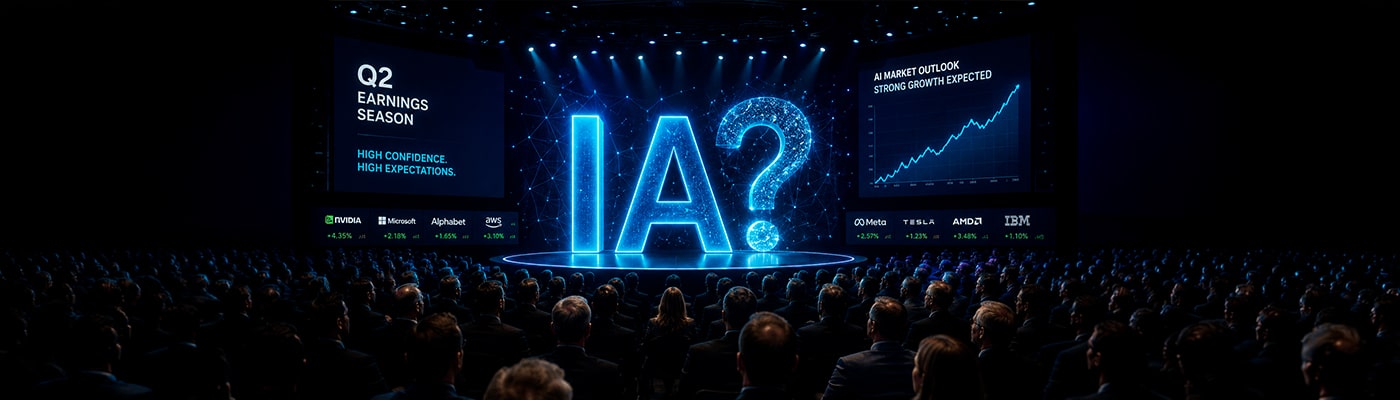
The upcoming second quarter earnings reporting period will have a significant impact on which way the AI trade will go. Confidence remains high going into the reporting period, but so too are expectations. Investor angst is largely tied to the commentary that the main AI-related companies will give in their conference calls. We will have to monitor how optimistic the various CEOs sound regarding demand as well as continued funding for the AI buildout. This is likely to determine whether the mega-caps can regain their leadership or whether the current rotation continues.
Date of report: July 8th of 2026